Preparing
LoadingPreparing
Loading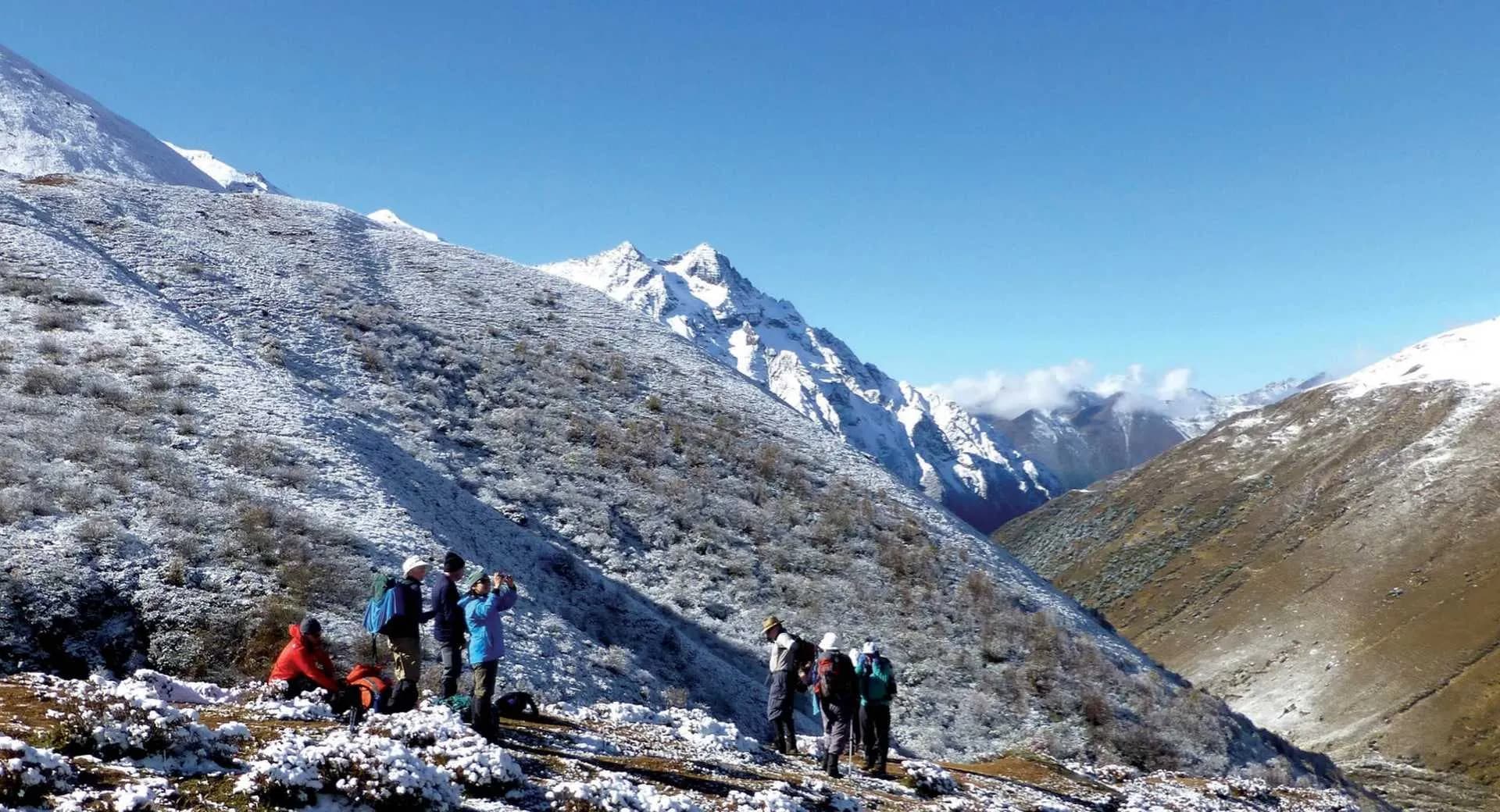
The most-demanding trek in the Himalaya
The Snowman Trek crosses the high north of Bhutan from Shana in the upper Paro valley (a 1-hour drive from Drukgyel Dzong on the now-motorable road), over eleven passes above 4,500 metres, through the glacial villages of Lunana, and out at Sephu in the Trongsa dzongkhag. Twenty-three trekking days; max altitude 5,320 metres; approximately 345 km on foot. It is held by experienced mountaineers to be one of the most-demanding treks in the broader Himalayan range, with a completion rate around 60% in any given season.
Day by day
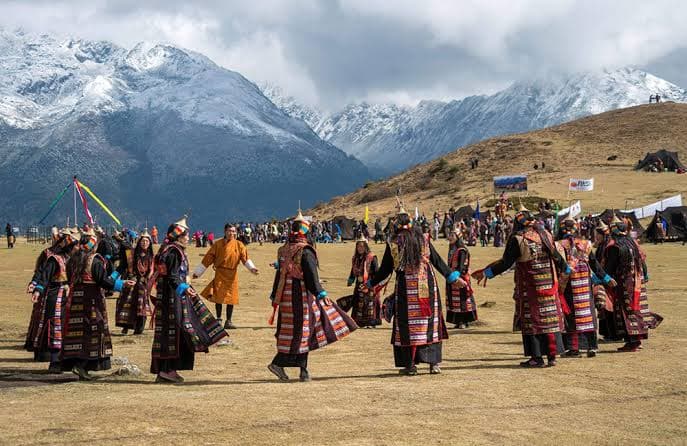
The trek begins at Shana in the upper Paro valley (driven from Drukgyel Dzong on the motorable road, approximately 1 hour), climbs the Chomolhari approach over the first four days (sharing the route with the standard Chomolhari and Chomolhari-Laya-Gasa treks), continues past the Lingshi yak-pastures into Laya, then turns north-east into Lunana — the highest inhabited valleys in Bhutan, where the Layap and Lunap communities have farmed yaks and barley at 4,000–4,500 metres for centuries. The Lunana days cross five major passes in succession — Karchung La (5,120m), Gangla Karchung La (5,080m), Saga La (5,320m, the trek's highest point), Jaze La (5,150m), and the descent passes Rinchen Zoe La and Thampe La — before the long descent to Sephu through the Nika Chhu valley.
The trek's reputation rests on three combined factors. The altitude — eleven passes above 4,500 metres, multiple days above 4,000 metres — leaves no margin for poor acclimatisation. The remoteness — between Days 10 and 20 the closest motorable road is several days' walk; rescue is by helicopter only and weather-dependent. The weather — the high passes are weather-vulnerable, and snow on any of the four highest passes can close the route for the season. The Bhutanese tradition still treats the route as a pilgrimage; the Lunana villages remain among the most-isolated inhabited communities in the broader Himalayan region.
The realistic candidate has prior multi-day high-altitude trekking experience (typically the Everest Base Camp circuit, the Annapurna Circuit, or the equivalent), maintains a cardiovascular base in the months preceding, and treats the trek as a commitment of physical and mental discipline. Pre-trek conditioning over 4–6 months — sustained hill walking with a 12 kg pack, three sessions per week minimum — is the typical preparation. The trek is supported by a porter-and-yak crew (yaks carry the principal load above the Lingshi grazing range), a cook team, and a experienced trek leader with high-altitude rescue training. The completion rate is around 60% in any given season; weather, altitude sickness, and minor injury are the principal reasons for withdrawal.
Before you go
Common questions
Expedition-grade. Twenty-three trekking days, eleven passes above 4,500 metres, max altitude 5,320 metres, approximately 345 km on foot at around 15 km a day on active days. The trek is widely held to be among the most-demanding in the broader Himalayan range, with a completion rate around 60% in any given season. Prior high-altitude multi-day trekking experience is required.
October is the principal window — dry, clear, cool, and weather-stable. June catches the pre-monsoon shoulder and is possible but weather-uncertain. The trek cannot be safely attempted in winter (November–May, snow on the passes) or monsoon (July–August).
Yes — the first 6–8 days share the route with the standard Chomolhari Trek and the Chomolhari-Laya-Gasa Trek. If full-Snowman commitment isn't feasible, the Laya-Gasa configuration (13 trekking days, exiting via Gasa) gives a cross-Himalayan experience with lower risk.
The Snowman is a premium-tier expedition product. The Royal Government's trekking permits, the Sustainable Development Fee across the trek, the porter-and-yak crew, the cook team, the experienced trek leader, the satellite communication, and the helicopter-rescue contingency together produce a price in the high-USD-5-figure range per traveller for a small-group departure. Begin a proposal through our concierge for a precise quote.
Yes — the first six days share the Chomolhari approach, with the Jangothang base camp providing one of the most direct views of Chomolhari (7,326 m) in the Bhutanese trekking landscape. The trek continues well past the Chomolhari ridge into the Lunana glacial valleys.
Monuments on the route
Monument
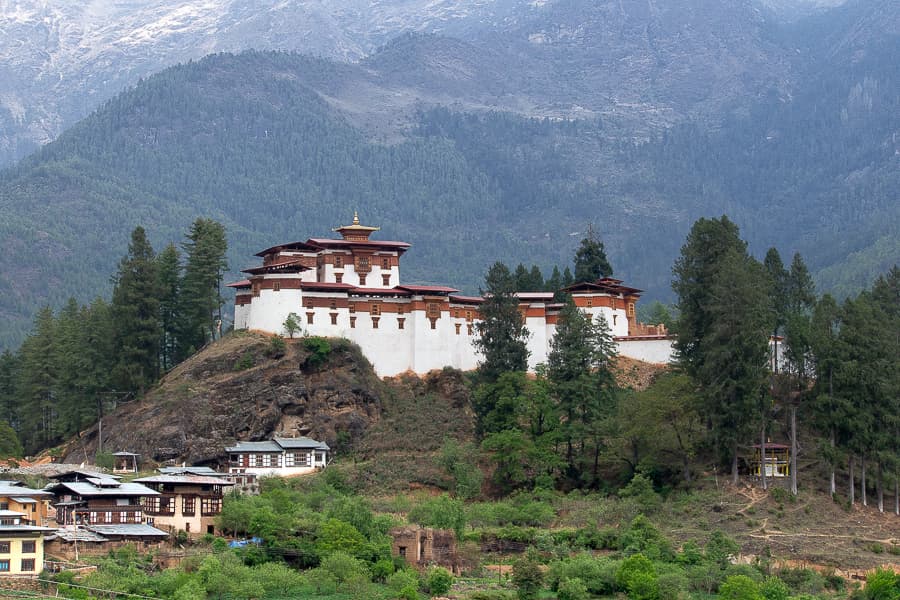
Drukgyel Dzong — the 1649 Bhutanese victory fortress, ruined by fire 1951, under restoration. The Chomolhari panorama and visiting.
Monument
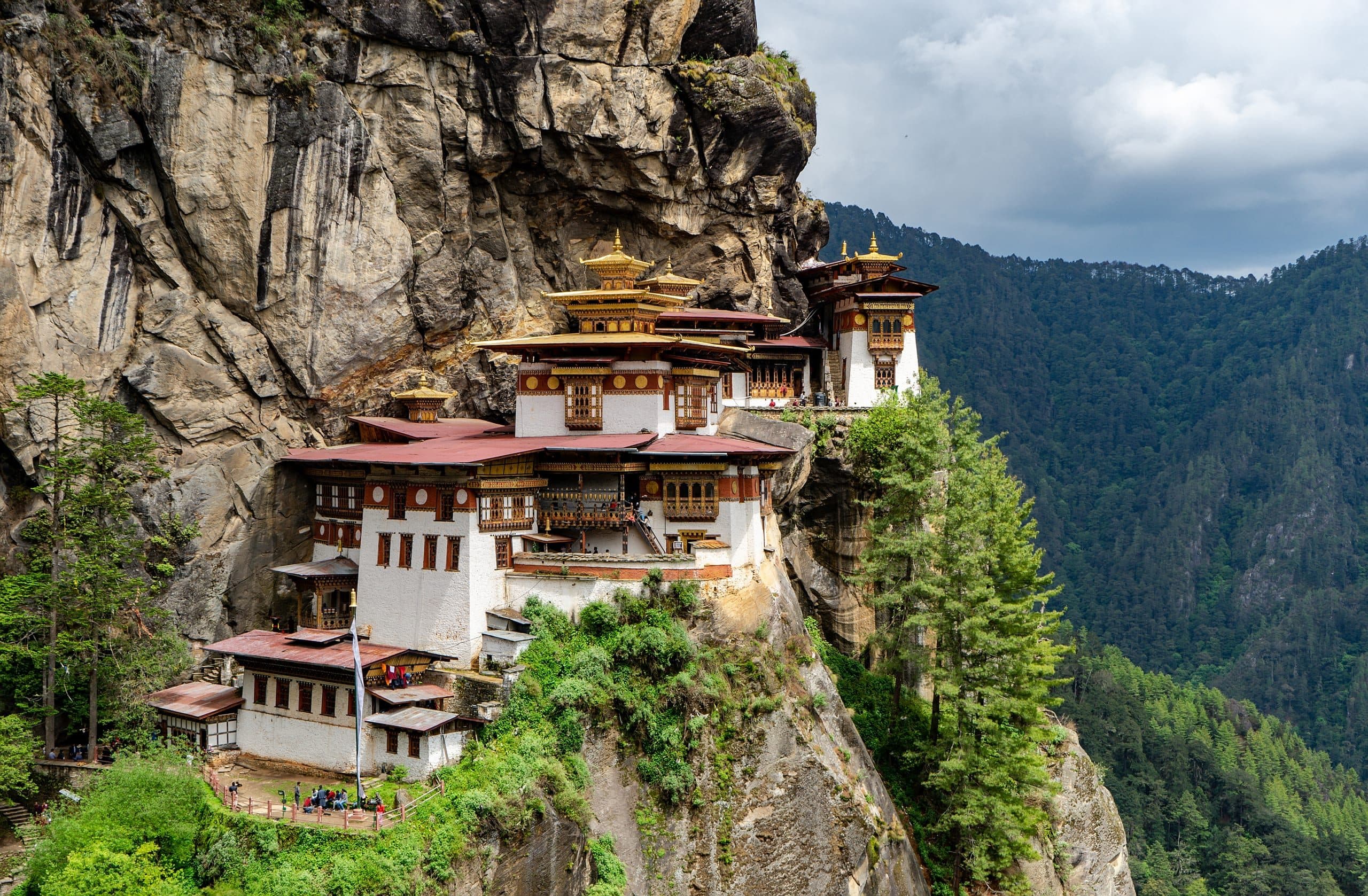
Paro Taktsang (Tiger's Nest) — the founding by Guru Rinpoche, the 1692 monastery, the 2-hour hike, what to know before you visit.
Journeys around this trek
Journey
The 28-night Bhutan Snowman Trek — 11 high passes, sustained altitude, the country's most demanding traverse. June–September monsoon window only.
Journey
A fourteen-night Bhutan Chomolhari Trek itinerary in the autumn clear-sky window. Five days at altitude, premium lodges either side, named trekking guides.
Five questions. A bespoke draft back within a day or two.