Preparing
LoadingPreparing
Loading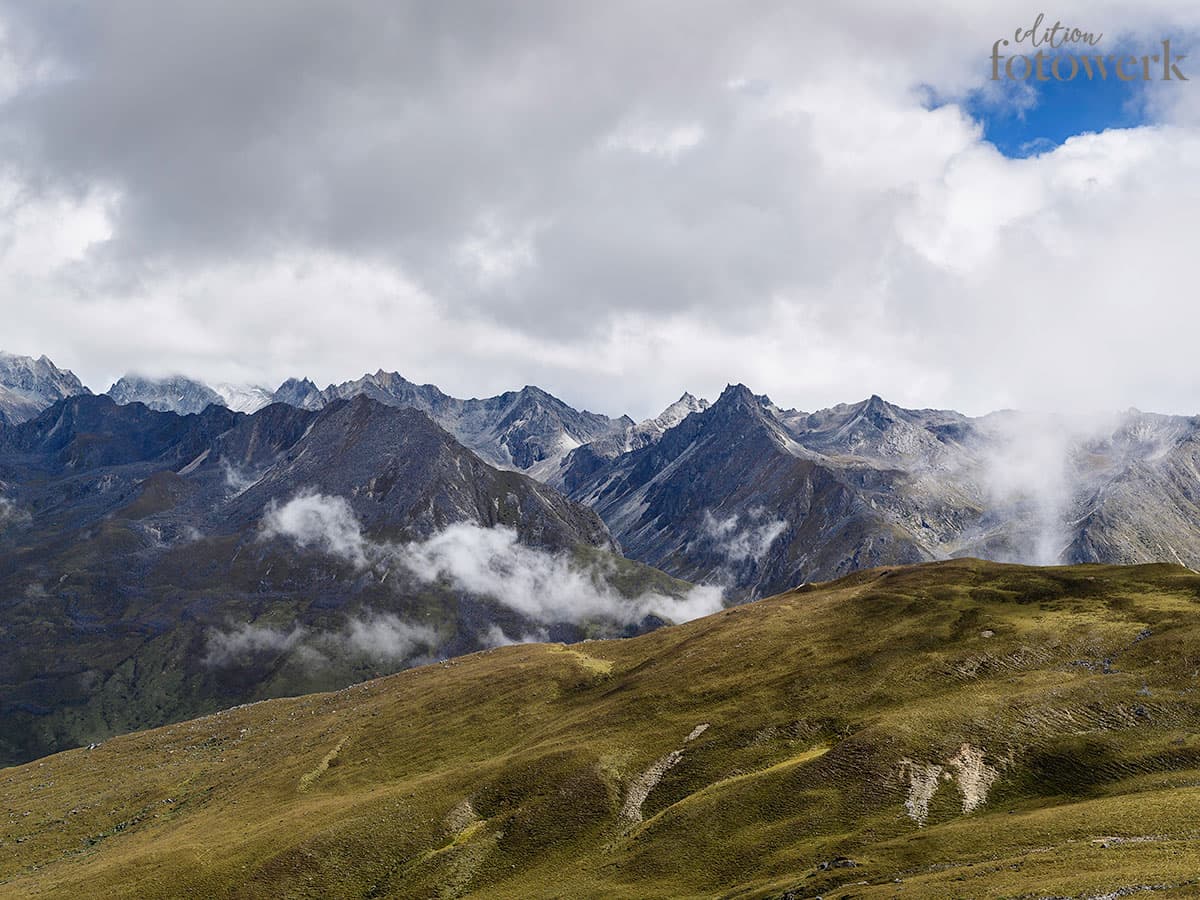
The cross-Himalayan trek
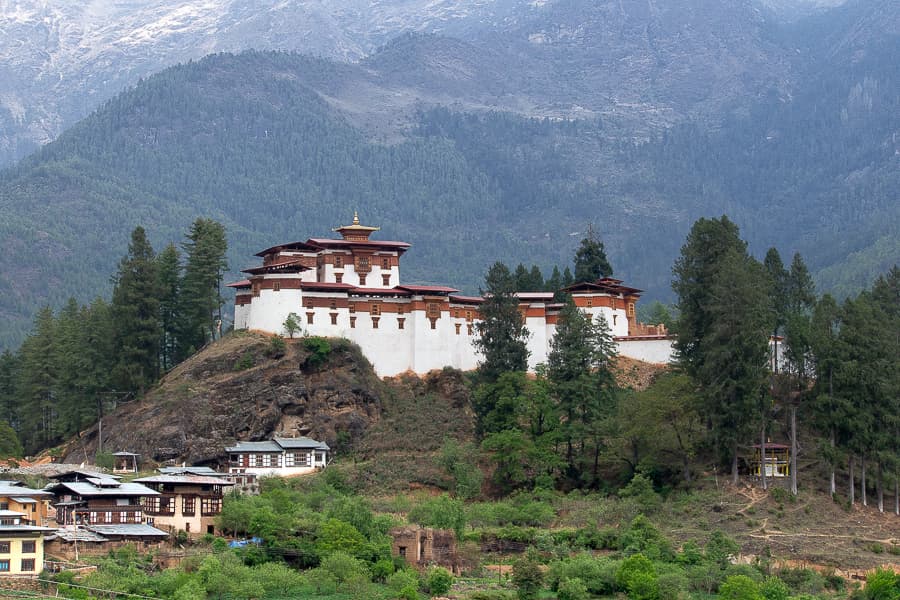
The Laya Lingshi Trek (also known as the Chomolhari-Laya-Gasa Trek) extends the Chomolhari route north through the Lingshi high country into the Layap yak-herding community, and exits via the Gasa hot springs — thirteen trekking days from Shana in the upper Paro valley (a 1-hour drive from Drukgyel Dzong on the now-motorable road) to the Gasa Tsachu hot springs. The principal Chomolhari base-camp views, the high-pasture country of Lingshi, the cultural encounter with the Layap, and the menchu hydrotherapy soak at the trek's natural conclusion.
Paro, Gasa (Lingshi, Laya, Gasa) · 13 days · strenuous
The trek begins at Shana in the upper Paro valley (driven from Drukgyel Dzong on the motorable road, approximately 1 hour), shares the first four days with the Chomolhari Trek (Jangothang base camp, Nyile La, Lingshi), then continues north-east into the Layap valleys via Chebisa, Robluthang, and the Sinche La pass (5,005m). Two to three days in the Layap community at 3,800 metres give the trek's principal cultural. The descent route via Gasa Tsachu closes the trek with the country's principal hot-spring soak. Thirteen trekking days total; the Sinche La pass is the principal altitude challenge.
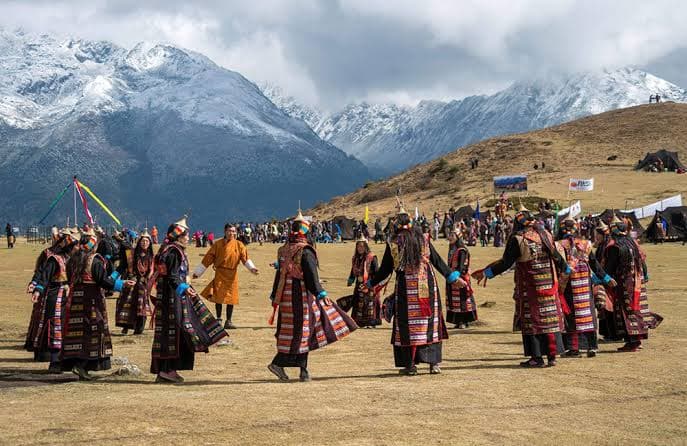
Laya village sits at 3,800 metres — one of the highest permanently-inhabited settlements in Bhutan and the principal cultural-encounter point of the trek. The Layap are a distinct semi-nomadic yak-herding community with their own language, dress, and folkloric tradition; the Layap women's conical yak-hair hats (decorated with silver and turquoise) are one of the most-photographed cultural images of the Bhutanese highlands. The community continues to live on the yak-and-barley economy that has sustained the Lunana-Laya valleys for centuries; the 21st-century cash economy has touched the village but the traditional pattern remains intact. The trek's 1-2 nights at Laya give the visitor a experience of the community — village house visits, the lhakhang, traditional song and dance in the evening.
The trek ends at the Gasa road-head, a 30-minute walk above the Gasa Tsachu hot springs. Most itineraries include a 1-2 night stay at the tsachu post-trek — the menchu hydrotherapy register that Bhutanese pilgrims have used for centuries to recover from the long-distance trekking and pilgrimage journeys. The sequence — fourteen days on foot, then the slow soak in mineral pools at body temperature, the post-trek meal at the lodge, the long sleep — closes the trek with a register the Western trekking tradition rarely matches.
Day by day
Day 1
3,610 m · 22 km · 8 h walking
Driven from Drukgyel Dzong to Shana on the motorable road (~1 hour). Climb to alpine meadow at Thangthangkha — the first camp.
Day 2
4,080 m · 19 km · 6 h walking
Reach Chomolhari base camp.
Day 3
4,080 m · 6 km · 4 h walking
Tsophu lakes; Chomolhari ridge.
Day 4
4,890 m · 18 km · 8 h walking
Nyile La (4,890m); descend to Lingshi.
Day 5
3,990 m · 12 km · 5 h walking
Traverse to Chebisa; notable waterfall above the camp.
Day 6
4,440 m · 17 km · 7 h walking
Gobu La (4,440m); descent to Shomuthang.
Day 7
4,750 m · 18 km · 8 h walking
Jare La (4,750m); descend to Robluthang.
Day 8
5,005 m · 19 km · 8 h walking
Sinche La (5,005m); descend to Limithang.
Day 9
3,800 m · 10 km · 5 h walking
Long descent into the Layap community; village welcome.
Day 10
3,800 m
Village exploration, lhakhang visit, traditional Layap meal and dance.
Day 11
3,050 m · 19 km · 7 h walking
Descend the Mo Chhu through old-growth rhododendron forest.
Day 12
2,770 m · 18 km · 7 h walking
Final descent to Gasa village; the dzong and the road-head.
Day 13
2,200 m · 4 km · 2 h walking
Short walk down to the tsachu pools. Begin the menchu hydrotherapy soak.
Before you go
Common questions
Five questions. A bespoke draft back within a day or two.